
Phone neck syndrome
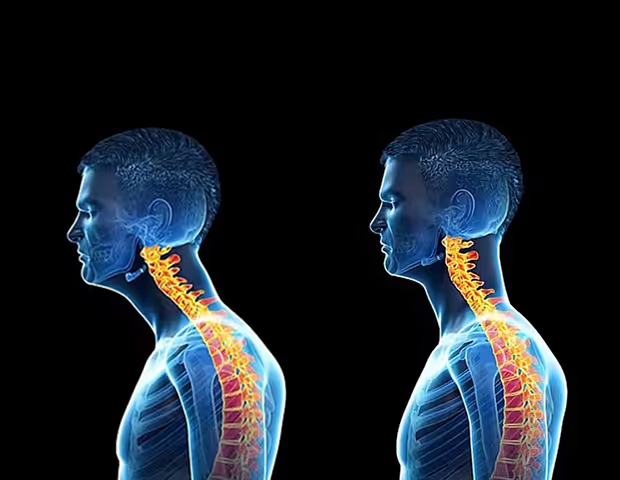
Phone ( text) Neck Syndrome
The smartphone emerges as an inevitable gadget in modern society, and its increased usage results in neck disorders among its users.
"Phone Neck Syndrome" develops when the cervical spine is held in a forward-flexed position for hours every day. The result is progressive structural damage — and it continues at night if what you sleep on does not restore the natural curve.
This sometimes controversial diagnosis was probably given following a physical examination where headaches and neck pain were present, and your doctor asked you about your cell phone and computer use. But beyond headache and neck pain, you may have come to this article because you may have “mysterious” and unexplainable symptoms. We will discuss these symptoms below.
An epidemic of text (phone) neck syndrome.
In today’s digital world: • 65.7% of the global population is online. Why are we talking about the pandemic usage of screens, especially phones? Because of widespread screen usage, the phone neck syndrome has influenced an incredible number of people on Earth. So, what do you think, how many people are affected by the phone(text) syndrome? The prevalence, independent of age, is high and equal to that of low back pain. Epidemiological data indicate that73% of university students and 64.7% of people who work have neck or back pain. 39.2% of them admit to being less productive due to neck or low back pain (nearly two-thirds, around70% of working adults. It’s becoming one of the most widespread issues of our time, and it’s taking a serious toll on our health. • Americans spend an average of 7 hours and 3 minutes daily on screens, equal to the amount of time we should spend sleeping. Average Screen Time - internet-connected devices among users in the US is 7 hours and 3 minutes (vs. global average of 6 hours and 40minutes). On average, screen time in the US remained almost unchanged since 2021 (from 7 hours 4 minutes in 2021 to 7 hours 3 minutes in 2023).
DO YOU HEAR CLEARLY? Yes, 7 hours and 3 minutes. So, nowadays this screen time should be compared to the time required for our night's sleep !!!
Prolonged periods of looking down at our phones will weaken and overstretch the ligaments along the neck, leading to “text neck.” The head is heavy, and the longer it is kept in a head-forward/flexed position, the greater the pressure on these ligaments. The frequent and prolonged flexion of the neck causes degenerative changes to the curve of the cervical spine and all the structures that support the neck. As the ligament weakness ensues, the forward head position worsens, and the ligaments can no longer keep the vertebrae in their proper alignment. To protect and stabilise the vital structures running through the neck, including the spinal cord, neck muscles will tighten and spasm. What we may feel is neck pain, tension headaches, and tingling sensations, among many other symptoms.
What are the symptoms of text neck syndrome?
- Muscle tension and pain, especially in the upper back and neck, at the occiput or base of the skull.
- Tightness across the shoulders, headaches, and neck soreness.
- Pain in the back, arms, fingers, hands, wrists, and elbows. Some sufferers may also notice numbness and tingling in their upper extremities.
Severe symptoms of text neck syndrome
As we will discuss further below, the cervical neck ligaments, the supporting structures that hold the neck bones in place, become stretched and damaged. When the ligaments cannot hold the bones of the neck in place, the bones wander. When the neck bones wander, they can compress the nerves, the carotid sheath, and/or the spinal cord.
The two most common mechanisms by which severe symptoms arise are:
- venolymphatic drainage compression (fluid gets backed up in the brain, which is explained further below), leading to intracranial hypertension and alterations of brain function an
- cervicovagopathy (cervical-induced vagus nerve injury or signal interference) causing dysautonomia and systemic inflammation.
Anatomical, Neurological, and Psychiatric Symptoms
Now let’s listen to doctors at Kore University of Enna in Italy. In their paper, the doctors sought to better understand the mysterious psychological side of Text Next Syndrome. After reviewing previously published studies they wrote in October 2022 in the journal Clinical Neuropsychiatry (2): “The overall results (outcomes) showed a strong association between (non-specific/chronic musculoskeletal disorder in neck, head or low back (that are called Upper Disorders) and mood disturbance, anxiety, depression, stress, alexithymia (the inability to express emotions), and low social support. Thus, high levels of Upper Disorders were associated with high levels of psychological disease.
What to do with such incredible widespread consequences? How to minimise the negative effect of prolonged screen usage?
The logical solution to the problem and answers to the questions above you'll find shortly. We are here to assist you:
According to human anatomy and physiology, a wooden pillow under the head, while you're sleeping, will provide you with the desired effect and counterbalance the negative influence of overlong phone usage time, preventing you from developing text neck syndrome. Our Wooden Pillow by Unusually Usual is designed to counterbalance screen-induced health problems. Crafted to ensure your neck and spine are in perfect alignment during sleep, this revolutionary pillow supports the natural curvature of the body—alleviating pressure, pain, and strain.
So, right now, the question to you: How do you describe a good pillow?
Take a look below:
· The Perfect Pillow supports your head and spine well.
· Its material has cooling properties.
· The material is hypoallergenic.
· A perfect pillow is easy to clean.
· It fits your budget. In our case, this is one time life purchase with the LIFETIME WARRANTY of the product.
· It has removable covers.
· Plus variable/adjustable.
· And what is very important- the pillow of the firm surface.
You’ll ask: How can the pillow be firm? It is the contradiction in terms.
Guess, why were talking about such different things: about the human achievements in high tech field on one hand, especially about the widespread usage of screens, and about the features of a good pillow on the other hand?
We must counterbalance 7-7.5 average hours of our daily screen time with the same hours of our slee time, using an exceptionally good pillow for our sleep routine for the same 7-7.5 hours, during our night sleep, keeping our head, neck, and spine all in neutral alignment, and supporting the natural curvature of our neck and spine. Keeping a neutral spine not only alleviates neck pain, it also relieves pressure throughout your entire body.
Nevertheless of the exceptional simplicity of the wooden pillow it gives as a counterweight to our health problems caused by the screens!
NEUTRAL NECK AND SPINE ALIGNMENT – the most required things during our sleep time! Those features can be provided to you by the Neck Pain & Sleep Reset Kit™by Unusually Usual! It means we , by your own conscious decision and choice, can do the contrary “thing” to your daily routine in a passive form, while you are sleeping☺.
Without a physiotherapist, without remedies, without the special dedicated time for your exercises, trying to keep your neck and spine healthy.
Read more at:
Text Neck Syndrome: Disentangling a New Epidemic
NIH NATIONAL LIBRARY OF MEDICINE
National Center for Biotechnology Information
More health related problems wooden pillow solves

Stiff neck
Blame your pillow if you wake up with a stiff neck. When you sleep, your head and neck should be aligned with the rest of your body.

Hand numbness
Why are my hands numb when I wake up and how can I treat this? Sleeping in a position that puts pressure on your neck, arm or hand is a common cause of numbness and pins needles sensation that soon resolves after waking up or repositioning, but it isn’t the only possibility.

Shoulder pain
The shoulders are made up of joints, muscles and tendons that work together so you can lift your arms. When something goes wrong with the joint, muscles or tendons, it can lead to shoulder pain. Up to 70% of people will have shoulder pain at some point, and it becomes more common as you get older. Shoulder pain can also make it hard to sleep.
Want to see howwe help people?
Free resources, from the heart

& get a free webinar now!