
The 90-Night Adaptation: Why the First Nights Are Not the Test
A firm, height-adjusted sleep support asks your neck to rest in a position it may not have held for years. Here is what to expect, stage by stage — and why we give you ninety nights to decide.
October 16, 2026
·
Ilona Navickienė, Founder
·
Reading time:
~
1
min.

New glasses feel strange for a few days. New running shoes need a few runs. Anyone who has moved from a soft mattress to a firm one knows the first nights say very little about the hundredth. A sleep support that changes how your head and neck rest works the same way: the first nights tell you that something is different, not whether it is working.
This article explains what happens across those nights, stage by stage, and why the Neck Pain & Sleep Reset Kit™ comes with ninety nights to decide rather than the usual thirty.
Why Adaptation Takes Weeks, Not Nights
Your neck muscles have a habit: the position they hold for six to eight hours every night. For many people that position has been shaped by years on a soft pillow that sinks under the head. A firm support at a height set to your body asks the same muscles to work differently. Research shows that support height changes how hard the neck muscles work and how the cervical spine is aligned during sleep — especially on your side. [1][2][3]
A habit of position changes the way most habits change: through repetition, night after night, rather than intensity. That is why the useful question in week one is not does this feel better yet? but is this getting more familiar?
Comfort and change
Two different questions, two different timescales
Comfort is a judgement you can make within a few weeks. It is what a typical thirty-night trial is built to test.
Change — in how your mornings feel — takes longer to read. The largest sleep-surface trials take their measurements at about three months, not one. [5]
We have not run a clinical trial of the Kit™ itself, and we don't claim that it changes the structure of the spine. What we can tell you is how long research takes to read outcomes, and what people who keep going tend to notice. The evidence, and its limits, are on our clinical claims page.
What to Expect, Stage by Stage
Adapting is not a straight line toward comfort. It moves through recognisable stages, and knowing which one you are in is the best protection against stopping at the wrong moment.
- Nights 1–3 · A new position
Not relief. Position.
The first thing you'll notice is how differently your head rests. Some people find their breathing feels easier straight away; most simply notice the firmness. Sleep may be lighter for a night or two: on the first night in any unfamiliar sleep environment, one half of the brain stays partly alert. It usually passes within a night or two. [6]
- Weeks 1–2 · Adaptation phase
You adapt
Your neck has held one shape for years and is now being asked to hold another, so the first nights feel unfamiliar. Some temporary stiffness is normal, and it is the point at which most people are tempted to stop. Around week two, research takes its first readings. [4]
- Weeks 3–4 · Adaptation phase
The body responds
Many people first notice that their mornings feel different — not that their pain has eased. It's easy to miss, because it isn't what you're looking for. Night thirty marks the end of the adaptation period, which is why our guarantee asks for thirty nights first.
- Weeks 5–8 · Consolidation phase
New habits take hold
Sleep position stabilises and tension eases. Many people stop noticing the firmness of the support at night — a sign the body is adapting to it.
- Month 3 · The outcome window
Where studies measure
The largest sleep-surface trials measure their results at around ninety days. [5] That is the reading point our ninety-night window is built around.
What consistent Kit™ users report
89%Significantly less morning neck stiffness
68%Fewer morning headaches
79%Improved overall wellness
Self-reported by consistent Kit™ users, beginning at the four-week adaptation period. Not a clinical trial. These figures come from people who kept using the Kit™; they say nothing about people who stopped. Details on our clinical claims page.
Why the First Week Is the Worst Time to Decide
The first two weeks are when the support feels least familiar and the old pillow looks most tempting. They are also the least informative point to judge anything, because the adaptation period has barely begun.
If you go back to a soft pillow during those weeks, nothing is damaged. Your neck simply returns to the position it held before, and a later attempt starts the adaptation again from night one. That is the real cost of stopping early: not harm, but having to begin again.
Thirty nights is not a hurdle. It's the shortest run that tells you anything — and we would rather you got the result than the refund.
One distinction matters. Mild stiffness is part of adapting. Sharp pain, numbness, tingling or pain spreading into the arm is not: stop, and speak to a doctor or physiotherapist before continuing.
“It took a week to become normal. I really feel: how easy it is to breathe.”
The 90-Night Guarantee — and Why Ninety
Most sleep products offer a thirty-day return window. Thirty nights is enough to judge comfort, and it is the end of the adaptation period — so it is the condition of our guarantee. But it closes before the point at which research reads its outcome.
90 Nights, because that is when the research reads its outcome. The largest sleep-surface trials take their measurements at three months, so we give you the whole window, not a shorter one that would close before the reading is taken. [5]
The adaptation guarantee
90 Nights. Thirty of them on it. Return shipping covered.
This is not a satisfaction guarantee. It is an adaptation guarantee.
Read the full guaranteeThe guarantee does a second job. With the whole window secured, there is no financial pressure to decide in week two, when the support feels strangest. Stiffness arriving on night five becomes a stage you were told to expect, not a verdict — and the sensible response is simply to keep going.
Key facts
EU-protected original · Registered design No. 009206642-0001
A corrective alignment tool for back and side sleeping — try it for 90 nights. All we ask is thirty of them.
Research-based design. Lifetime warranty. Natural Lithuanian ash, hand-finished in Lithuania. The evidence — and what it doesn't show — is there for you before you decide.
Explore the Kit™View clinical evidenceNot a satisfaction guarantee — an adaptation guarantee. 90 Nights. Thirty of them on it. Return shipping covered.
People also ask
Common questions about the adaptation
Short answers to the questions people ask most about the first ninety nights.
Can I sleep on my side during the adaptation?
Yes. The Kit™ is used on the back and on the side, and the height insert is set to your build and your sleep position. Side sleepers often need a little longer to get used to a firm surface. Some place a thin folded cloth alongside the sleep tool for the first week or so as a transition, as long as the tool stays the main support for the head and neck.
→ Read more: Sleep position and the neck
What if the discomfort in the first week is more than mild?
Mild stiffness in the first two weeks is expected. Sharp or severe pain, numbness, tingling, or pain spreading into the arm is not part of adapting: stop, and see a doctor or physiotherapist before you continue. Adapting should feel like muscles getting used to a new position, never like an injury.
→ Full answer: Why the first week is the worst time to decide
Does the guarantee require using the Kit™ every single night?
It doesn't ask for a perfect streak. It asks for thirty nights on the Kit™ within the ninety-night window — the adaptation period — so that you judge it on a fair test rather than on the first week. The full terms are on our guarantee page.
→ Read more: Full guarantee terms
Is the Kit™ suitable for people with osteoporosis or other bone and joint conditions?
Ask your doctor first if you have severe osteoporosis, a recent neck fracture, injury or surgery, diagnosed neck instability, or an inflammatory joint condition. A firm sleep support is not the right choice for everyone, and a clinician who knows your history is the right person to decide.
Why ninety nights and not thirty?
Thirty nights is enough to judge comfort, and it is the end of the adaptation period — so it is the condition of our guarantee. Ninety is the window, because that is when the research reads its outcome: the largest sleep-surface trials take their measurements at three months, so we give you the whole window rather than a shorter one that would close before the reading is taken.
→ Full answer: The 90-Night Guarantee — and why ninety
What happens if I stop at week four?
Week four is a fair point to judge — it is the end of the adaptation period, and some people notice their mornings changing by then. Others notice later. If you go back to your old pillow, your neck simply returns to the position it held before; trying again later means starting the adaptation again from night one.
→ Full answer: Why the first week is the worst time to decide
Medical disclaimer: This article is for informational and educational purposes only and does not constitute medical advice. Mind Your Sleep by Unusually Usual does not diagnose, treat or cure any medical condition. Always consult your qualified healthcare provider before making changes to your health management or sleep routines. Research is cited with its limits; individual experiences vary.
References
- Lei JX, Yang PF, Yang AL, Gong YF, Shang P, Yuan XC. Ergonomic considerations in pillow height determinants and evaluation. Healthcare (Basel). 2021;9(10):1333. https://pmc.ncbi.nlm.nih.gov/articles/PMC8544534/
- Pang JCY, Tsang SMH, Fu ACL. The effects of pillow designs on neck pain, waking symptoms, neck disability, sleep quality and spinal alignment in adults: a systematic review and meta-analysis. Clinical Biomechanics. 2021;85:105353. https://pubmed.ncbi.nlm.nih.gov/33895703/ — The review found no effect on subjective sleep quality.
- Jiao R, et al. The impact of pillow height on neck muscle activity: a pilot study. Sleep and Breathing. 2024. https://pubmed.ncbi.nlm.nih.gov/39625641/
- Yamada S, Hoshi T, Toda M, Tsuge T, Matsudaira K, Oka H. Changes in neck pain and somatic symptoms before and after the adjustment of the pillow height. Journal of Physical Therapy Science. 2023;35(2):106–113. https://pmc.ncbi.nlm.nih.gov/articles/PMC9889209/
- Kovacs FM, Abraira V, Peña A, et al. Effect of firmness of mattress on chronic non-specific low-back pain: randomised, double-blind, controlled, multicentre trial. The Lancet. 2003;362(9396):1599–1604. https://pubmed.ncbi.nlm.nih.gov/14630439/ — Cited for its ninety-day measurement point only.
- Tamaki M, Bang JW, Watanabe T, Sasaki Y. Night watch in one brain hemisphere during sleep associated with the first-night effect in humans. Current Biology. 2016;26(9):1190–1194. https://pubmed.ncbi.nlm.nih.gov/27112296/
Our approach
Neck Pain & Sleep Reset Kit™
Physiotherapist-designed · EU-protected original · 90-Night Adaptation Guarantee · Lifetime Warranty




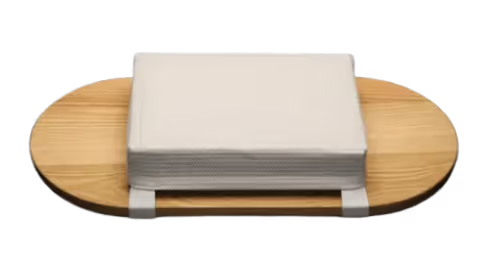
Investment in your wellness
Your body has been waiting long enough.
The Neck Pain & Sleep Reset Kit™ by Unusually Usual® -
a registered Community design, made for a range of body types and sleep positions.
begin my recovery
90-Night Guarantee · Lifetime Warranty · Ships Worldwide · EU-Registered
Mind Your Sleep
Get Unusually Usual now
mind your Sleep
get UNUSUALLY USUAL now
Want to see howwe help people?
we help
people?
Free resources, from the heart

Workshops
Body Mindfulness Videos
PDFs
Join Unusually Usual ® Followers
& get a free webinar now!
& get a free webinar now!
Thank you! Your submission has been received!
Oops! Something went wrong while submitting the form.