
Body Mindfulness vs. Traditional Fitness: What Each Does for Your Neck — and Why You Need Both
You can be fit and still wake with a stiff neck. Here is what traditional fitness does brilliantly, what it isn't designed to do, and how Body Mindfulness fills the gap — by day, alongside your training, not instead of it
October 16, 2026
·
Ilona Navickienė, Founder
·
Reading time:
~
1
min.
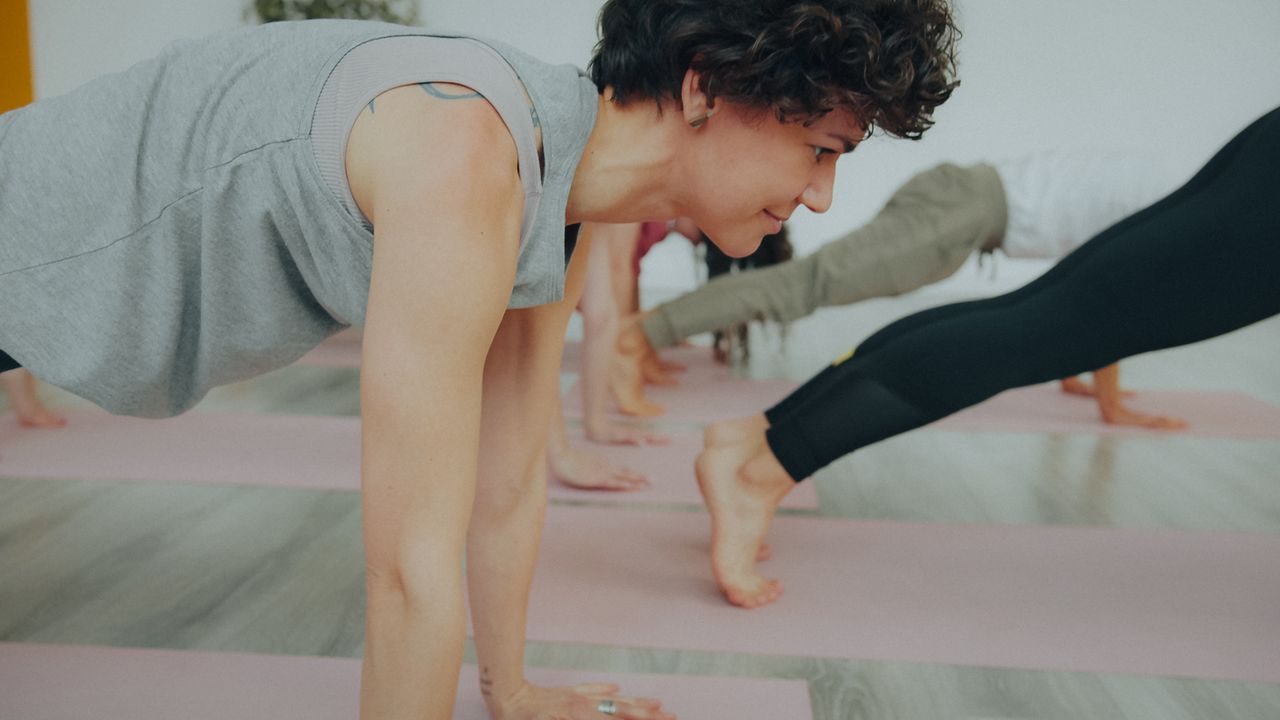
You can run a half-marathon, lift well, and still wake up with a stiff neck. That isn't a failure of fitness. Fitness is built to make the body stronger and fitter. It isn't built to change how you hold your head for eight hours at a desk, or what your neck rests on for eight hours at night — and those hours add up to most of the day.
This article explains what traditional fitness does brilliantly, what it isn't designed to do, and how Body Mindfulness — the method behind Ilona Navickienė's courses — fits alongside it. It also explains where the night-time side, our Neck Pain & Sleep Reset Kit™, comes in.
Two Different Goals
Traditional fitness builds capacity: strength, endurance, speed, power. The evidence for its benefits — to the heart, the muscles and bones, mood and sleep — is overwhelming, and the World Health Organization recommends regular physical activity for almost everyone. [1]
Body Mindfulness builds awareness: of how you sit, move, breathe and rest. In Ilona's words, it is the conscious cooperation of the mind and body during any physical action — focusing your attention on the present moment and fully engaging in what you're doing.
Traditional fitness
Asks: what can my body do? Measures strength, endurance and performance. Examples: running, cycling, gym training, group classes, sport.
Body Mindfulness
Asks: how is my body doing it? Develops attention to posture, breathing, movement and rest. Examples: posture awareness, breathing practice, slow attentive movement, self-massage.
Neither is better. They answer different questions, and most people only ever ask the first one.
What Fitness Does — and What It Isn't Designed to Do
This isn't an argument against fitness. Exercise is the approach neck pain guidelines recommend most consistently. [2] But each kind of activity has a job, and it helps to know which job you're asking it to do.
What each approach does for your neck
And what it doesn't do on its own
| Approach | Good for | Doesn't, on its own |
|---|---|---|
| Aerobic exercise | Heart and lung fitness, mood, energy, sleep, long-term health. [1] | Teach you how you hold your head at a screen, or what supports it at night. |
| Strength training | Muscle and bone strength, including the muscles that support the neck and shoulders. | Change habits outside the gym — and heavy lifts done with the head pushed forward can aggravate a sore neck. |
| Targeted neck exercise with a physiotherapist | The approach neck pain guidelines recommend most consistently, often combined with hands-on treatment and education. [2] | Last beyond the programme unless the exercises are kept up. |
| Body Mindfulness practices | Awareness of how you sit, move, breathe and rest — the habits of the hours you're not training. | Replace physical training, or medical care when it's needed. |
| Support at night | Changes the position your neck rests in for six to eight hours. Support height changes how hard the neck muscles work. [5][6] | Do anything for your daytime habits — and it hasn't been shown to reduce chronic neck pain on its own. |
One practical point for people who train: heavy lifts, overhead pressing and rowing are often done with the head pushed forward. If your neck is already sore, keeping your head in a comfortable, neutral position — and asking a physiotherapist or coach to check your form — matters more than adding weight.
The Missing Piece: Knowing Where Your Head Is
Your nervous system keeps a constant sense of where your body is in space. For the neck, that includes knowing where your head is without looking. Studies of people with neck problems have found measurable changes in this sense of head and neck position, and researchers recommend retraining it as part of care. [3]
Fitness training doesn't usually work on that sense; it works on output. Body Mindfulness practices do the opposite: slow, deliberate movement with full attention to how it feels, so you notice sooner when your head drifts forward over a screen — where a widely cited model puts the load on the neck at around 22 kg at a 45-degree tilt. [4]
“The problem isn't your discipline. It's what your body hasn't learned yet.”
What Body Mindfulness Practices Look Like
Body Mindfulness isn't meditation, and it isn't a workout. Most practices take minutes, and many can be done at a desk or before bed.
Posture awareness
Noticing where your head is at a screen, in the car, on the sofa — and returning to a comfortable, neutral position without forcing it. The aim is to sense more accurately, not to hold a rigid pose.
Breathing
Diaphragmatic breathing practices that shift breathing away from the upper chest and shoulders, which many people tense without noticing.
Slow, attentive movement
Gentle movement done with full attention to how it feels, coordinating movement with breath. Different from training: the goal isn't to do more, but to notice more.
Self-massage and rest
Short self-massage and rolling practices, and learning what genuine rest feels like — including how you lie down at night.
Behind them sit five simple rules from Ilona's method: want — of your own free will; know — your own body and how it works; understand — the principle behind what you do; do — better imperfectly than to do nothing perfectly; and enjoy — the result and a fuller life.
How They Fit Together
The point isn't Body Mindfulness instead of fitness. It's fitness for capacity, Body Mindfulness for the hours in between, and good support for the hours you sleep. Each covers time the others don't.
Day and night
Three inputs, three different parts of the day
Training builds strength and fitness — a few hours a week.
Body Mindfulness shapes how you sit, move, breathe and rest — the rest of your waking day.
Support at night decides the position your neck rests in for six to eight hours. Support height changes how hard the neck muscles work during sleep. [5][6]
“I guide you back to what's already yours.”
“After a longer time you realise it also changes your thinking, and how you approach problems.”
The Body Mindfulness Courses
Ilona's courses turn the method into a clear path, with a plan, a rhythm and practical exercises. They are currently taught in Lithuanian, with English programmes in preparation, and every course comes with lifetime access and a 30-day money-back guarantee.
My Body Map: 5 Rules for a Healthier and Happier Life
Four weeks, online: four lectures with Ilona and four practical exercise video modules, on a private learning platform. €178.
See the courseRestorative Sleep: 3-Week Online Course
Three weeks, online: three lectures, the 21-night firm-surface challenge, and practical modules on diaphragmatic breathing, relaxation and self-massage. €139.
See the courseThere are also short practical videos of 3–40 minutes for single topics, several of them free. See all courses and videos, or read more about our method.
Key facts
Exercisethe approach neck pain guidelines recommend most consistently [2]
5 ruleswant, know, understand, do, enjoy
3–4 weeksthe length of each structured course
30 daysmoney-back guarantee on every course
EU-protected original · Registered design No. 009206642-0001
The night-time half: a corrective alignment tool for back and side sleeping — try it for 90 nights. All we ask is thirty of them.
Research-based design. Lifetime warranty. Natural Lithuanian ash, hand-finished in Lithuania. We claim no CE mark or medical-device approval, and the evidence — and what it doesn't show — is there for you before you decide.
Explore the Kit™View clinical evidenceNot a satisfaction guarantee — an adaptation guarantee. 90 Nights. Thirty of them on it. Return shipping covered.
For more, our article What Is Phone Neck Syndrome? explains how screen posture loads the neck by day, and the Journal also covers the neck's natural curve, relief versus correction and the first ninety nights.
People also ask
Common questions about Body Mindfulness and fitness
Short answers to the questions people ask most about training, awareness and the neck.
Can regular gym training help neck pain?
Yes. Exercise is the approach neck pain guidelines recommend most consistently, [2] and stronger neck and shoulder muscles help. Two things make it work better: keeping your head in a comfortable, neutral position during lifts rather than pushed forward, and getting a physiotherapist's guidance if your neck is already sore. Gym training doesn't change the hours you spend at a screen or how your neck rests at night, which is where awareness and sleep support come in.
→ Full answer: What fitness does — and what it isn't designed to do
What is Body Mindfulness?
Body Mindfulness is the conscious cooperation of the mind and body during any physical action or exercise: focusing your attention on the present moment and fully engaging in the action as you perform it. It's the method Ilona Navickienė has developed over more than thirty years of working with people, built on five rules — want, know, understand, do, enjoy. It isn't a sport, and it isn't a substitute for medical care.
→ Full answer: Two different goals
Is yoga good for neck pain?
It depends on the yoga. Many people with neck pain find gentle, slow forms helpful. If your neck is sore, avoid forcing positions that put weight on the head or neck, such as headstands and shoulder stands, and tell the instructor. If a position causes pain, stop.
→ Full answer: What Body Mindfulness practices look like
Does swimming help neck pain?
Many people find swimming comfortable, because the water supports the body and the movement is low-impact. Turning the head to breathe in front crawl rotates the neck repeatedly, so if that's uncomfortable, backstroke — or a swimming snorkel — may suit you better.
→ Full answer: What fitness does — and what it isn't designed to do
Do I need the Kit™ to take the courses?
No. The courses work on their own, and so does the Kit™. Together they cover different hours: the courses the time you're awake, the Kit™ the time you sleep. The courses are currently in Lithuanian, with English programmes in preparation.
→ Full answer: How they fit together
Are the courses suitable for beginners, or for people with health conditions?
They're designed for beginners: Ilona explains each step, so you understand what you're doing rather than just copying it. If you have acute pain or inflammation, have had recent surgery or an injury, or have symptoms such as numbness or weakness, speak to your doctor before starting — as you would with any movement programme.
→ Full answer: The Body Mindfulness courses
Medical disclaimer: This article is for informational and educational purposes only and does not constitute medical advice. Mind Your Sleep by Unusually Usual does not diagnose, treat or cure any medical condition. Always consult your qualified healthcare provider before changing your exercise programme, health management or sleep routines. Research is cited with its limits; individual experiences vary.
References
- Bull FC, Al-Ansari SS, Biddle S, et al. World Health Organization 2020 guidelines on physical activity and sedentary behaviour. British Journal of Sports Medicine. 2020;54(24):1451–1462. doi:10.1136/bjsports-2020-102955
- Blanpied PR, Gross AR, Elliott JM, Devaney LL, Clewley D, Walton DM, Sparks C, Robertson EK. Neck pain: revision 2017. Journal of Orthopaedic & Sports Physical Therapy. 2017;47(7):A1–A83. doi:10.2519/jospt.2017.0302
- Treleaven J. Sensorimotor disturbances in neck disorders affecting postural stability, head and eye movement control. Manual Therapy. 2008;13(1):2–11. doi:10.1016/j.math.2007.06.003
- Hansraj KK. Assessment of stresses in the cervical spine caused by posture and position of the head. Surgical Technology International. 2014;25:277–279. PMID: 25393825. A computer model; values are estimates.
- Jiao R, et al. The impact of pillow height on neck muscle activity: a pilot study. Sleep and Breathing. 2024. https://pubmed.ncbi.nlm.nih.gov/39625641/
- Lei JX, Yang PF, Yang AL, Gong YF, Shang P, Yuan XC. Ergonomic considerations in pillow height determinants and evaluation. Healthcare (Basel). 2021;9(10):1333. https://pmc.ncbi.nlm.nih.gov/articles/PMC8544534/
Our approach
Neck Pain & Sleep Reset Kit™
Physiotherapist-designed · EU-protected original · 90-Night Adaptation Guarantee · Lifetime Warranty




Investment in your wellness
Your body has been waiting long enough.
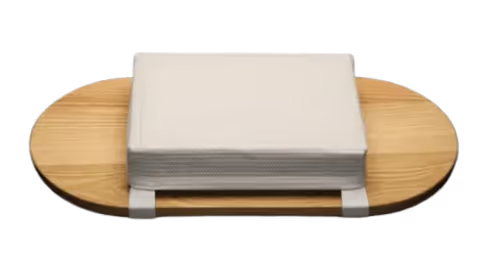
The Neck Pain & Sleep Reset Kit™ by Unusually Usual® -
a registered Community design, made for a range of body types and sleep positions.
begin my recovery
90-Night Guarantee · Lifetime Warranty · Ships Worldwide · EU-Registered
Mind Your Sleep
Get Unusually Usual now
mind your Sleep
get UNUSUALLY USUAL now
Want to see howwe help people?
we help
people?
Free resources, from the heart

Workshops
Body Mindfulness Videos
PDFs
Join Unusually Usual ® Followers
& get a free webinar now!
& get a free webinar now!
Thank you! Your submission has been received!
Oops! Something went wrong while submitting the form.